
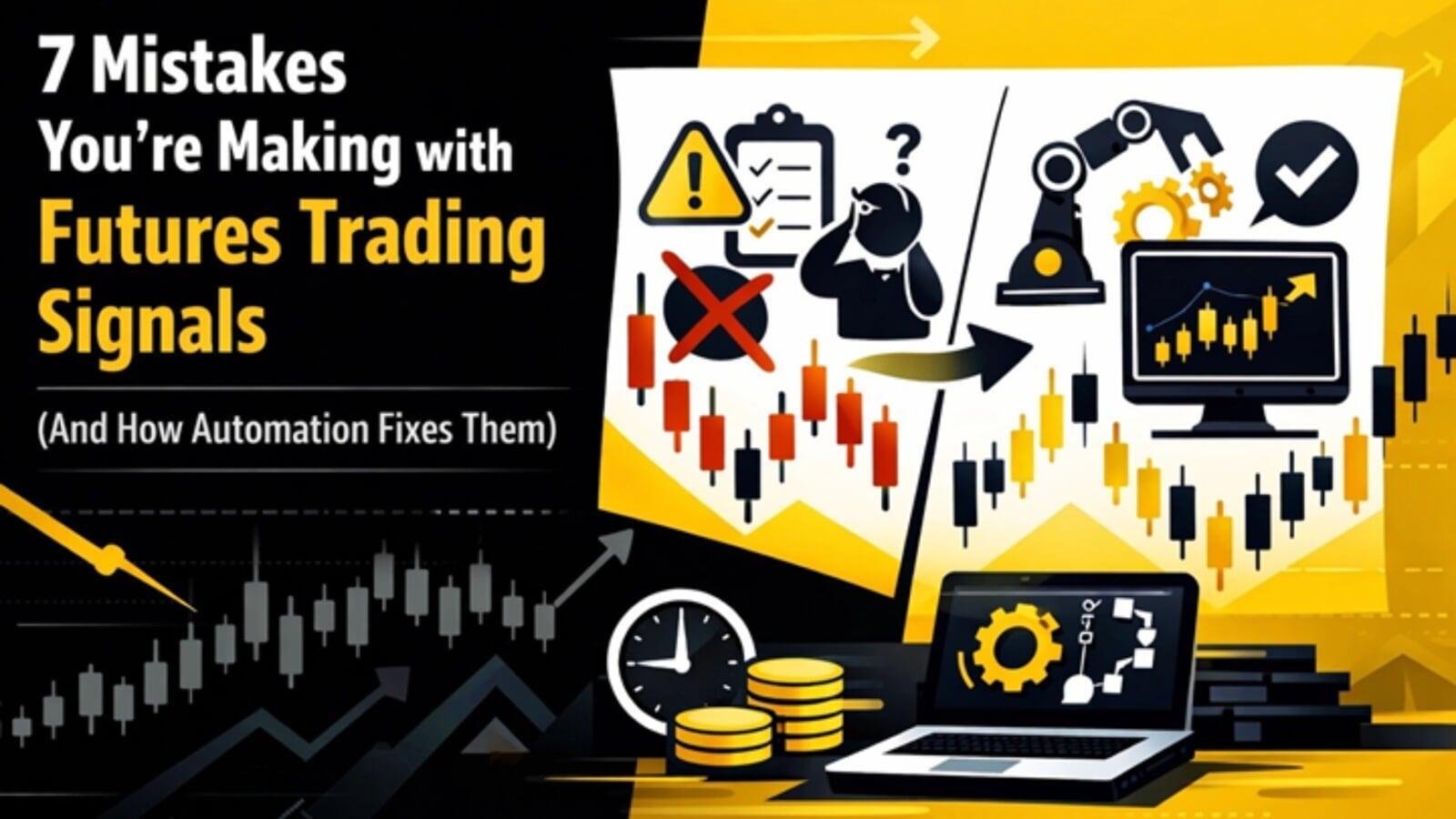
Trading futures with signals...the promise of expert insights at your fingertips...
You subscribed to that premium signal service. You're getting notifications throughout the day. Entry points, exit targets, stop losses: all clearly laid out. Yet somehow, your account isn't reflecting the performance you expected.
If you're using futures trading signals but still struggling to se consistent profits, you're likely making one or more critical execution errors that automation can eliminate entirely. Let's explore the most common mistakes signal traders make and how automated futures trading software transforms signal-based strategies into reliable, emotion-free execution systems.
Trading futures with signals...the promise of expert insights at your fingertips...
You subscribed to that premium signal service. You're getting notifications throughout the day. Entry points, exit targets, stop losses: all clearly laid out. Yet somehow, your account isn't reflecting the performance you expected.
If you're using futures trading signals but still struggling to se consistent profits, you're likely making one or more critical execution errors that automation can eliminate entirely. Let's explore the most common mistakes signal traders make and how automated futures trading software transforms signal-based strategies into reliable, emotion-free execution systems.
Mistake#1: Hesitating Before Entry (Then Missing the Move)
You receive a futures trading signal at 9:32 AM. The alert says "Enter long ES at 5,245." But you pause. You want to check one more indicator. You refresh your chart. You scroll through Twitter to see if anyone else is talking about this setup.
By 9:38 AM, price has already moved to 5,252: seven points away from your intended entry. You either chase the trade and enter at a worse price, or you watch the entire move play out without you.
This hesitation happens because you're second-guessing the signal in real-time. Your brain introduces doubt at the exact moment when decisive action is required. Even a delay of 30 seconds can mean the difference between a winning trade and a losing one in fast-moving futures markets.
Mistake#2: Adjusting Your Position Size Based on Recent Results
Your last three trades were winners. You're feeling confident. The next signal comes through, and instead of your standard position size, you decide to increase to three contracts because you're "on a hot streak."
Or the opposite happens: you've had two consecutive losses, so when the next high-probability signal arrives, you reduce your position to just one contract instead of your planned two. You're trying to "protect" your account, but you're actually undermining your futures trading strategy.
Position sizing based on emotions rather than risk parameters destroys even the best signals. Your signal provider calculated their expected returns based on consistent position sizing: when you deviate, you're no longer following their methodology.
How automation fixes this: Automated futures trading software executes every trade with mathematically consistent position sizing based on your account size and predefined risk parameters. There's no psychological influence: just systematic execution
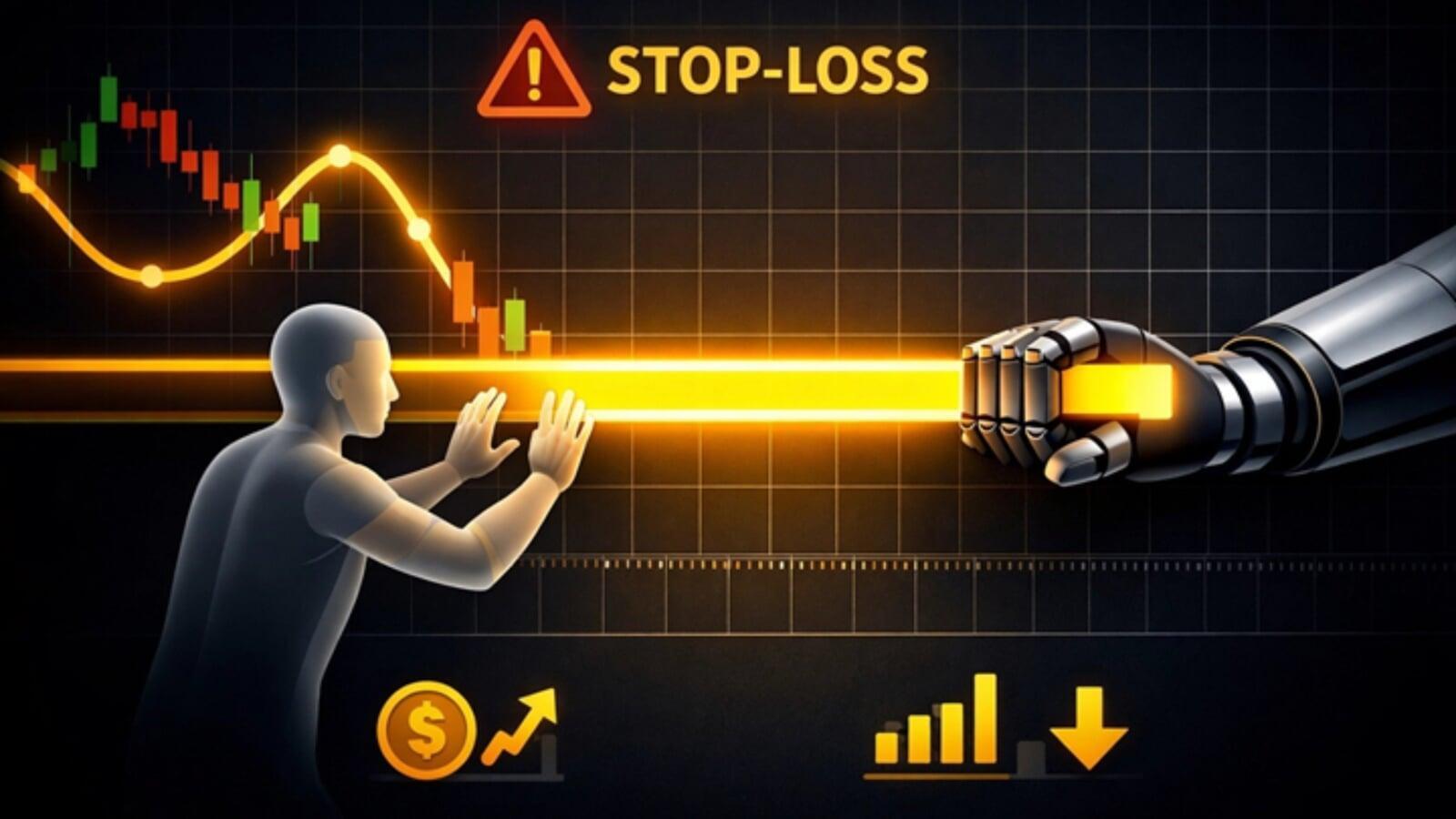
Mistake #3: Moving Your Stop Loss When Price Approaches It
This might be the most expensive mistake signal traders make. Your signal included a stop loss at 5,238. Price is currently at 5,240 and heading downward. You think, "If I just give it two more points of room, it might reverse."
You move your stop to 5,236. Then to 5,234. Before you know it, you've taken a loss three times larger than originally planned because you couldn't accept being wrong on this particular trade.
Stop losses exist for a reason: they're calculated exit points that protect your capital when the trade thesis is invalidated. Moving them defeats their entire purpose and exposes you to catastrophic risk.
How automation fixes this: Automated systems execute stop losses without question or modification. The moment price hits your predetermined exit, the position closes. There's no negotiating, no "just a little more room," no emotional attachment to being right.
Mistake #4: Exiting Winners Too Early (Then Watching Them Continue)
Your signal indicated a target of 5,260 with a stop at 5,238. You entered at 5,245. Price moves quickly to 5,253: you're up eight points and feeling good. Then price pulls back slightly to 5,251.
Panic sets in. What if this winner turns into a loser? You close the position at 5,251 with a six-point profit. Two hours later, price reaches 5,264: the signal would have been a complete winner if you'd simply let it run to target.
This mistake stems from fear of giving back profits. You're prioritizing the immediate emotional relief of booking a winner over following the complete futures trading strategy that generated the signal in the first place.
How automation fixes this: Automated execution maintains positions until predefined targets are reached. There's no early exit based on fear. The system follows the complete trade plan from entry through exit, capturing the full move the signal identified.

Mistake #5: Not Scaling In or Out According to the Signal's Instructions
Many sophisticated futures trading signals include scaling instructions: "Enter 50% position at 5,245, add remaining 50% if price reaches 5,242" or "Exit 50% at first target, let remainder run to final target."
These scaling techniques improve risk-reward ratios and position management. But executing them manually requires constant monitoring, precise timing, and unemotional discipline. Most traders struggle with at least one of these requirements.
You might nail the first entry but completely miss the second add-on because you stepped away from your screen. Or you forget to take partial profits at the first target, then watch the entire position reverse against you.
How automation fixes this: Sliver Bullet Pro handles complex scaling automatically. The software can execute multi-stage entries and exits with perfect precision, implementing sophisticated position management techniques that would be nearly impossible to execute manually with consistency.
Mistake #6: Ignoring Signals Because You're Emotionally Drained
You took three consecutive losses last week. Each trade followed the signal perfectly: you did nothing wrong: but the market simply didn't cooperate. Now it's Monday morning, fresh signals are coming through, but you can't bring yourself to take them.
You're protecting yourself from further emotional pain, but you're also guaranteeing that you'll miss the winning trades that follow losing streaks. Every successful futures trading strategy includes draw-down periods: the winning trades that follow are how you recover.
By allowing emotional exhaustion to override systematic execution, you're sabotaging the statistical edge your signals provide. You need to be present for every signal to capture the positive expectancy over time.
How automation fixes this: Automated futures trading software doesn't experience emotional fatigue. It executes every signal according to the programmed rules, whether it's following three winners or three losers. Consistency is the foundation of profitable futures trading signals: automation delivers consistency regardless of recent results.
Mistake #7: Taking Signals Selectively Based on "Feeling"
Your signal service sends out 15 trades per week. You don't take all of them: instead, you choose the ones that "feel right" based on your market view or recent price action. You're essentially trading your own discretion rather than following the signal provider's complete system.
This selective execution destroys the statistical integrity of the signal service. The provider's track record assumes you're taking every signal. When you cherry-pick, you're creating an entirely different strategy with unknown expectancy.
Often, the signals you skip end up being winners, while the ones that "felt right" become losses. Your subjective filter isn't improving results: it's adding randomness and emotion to a system designed to be systematic.
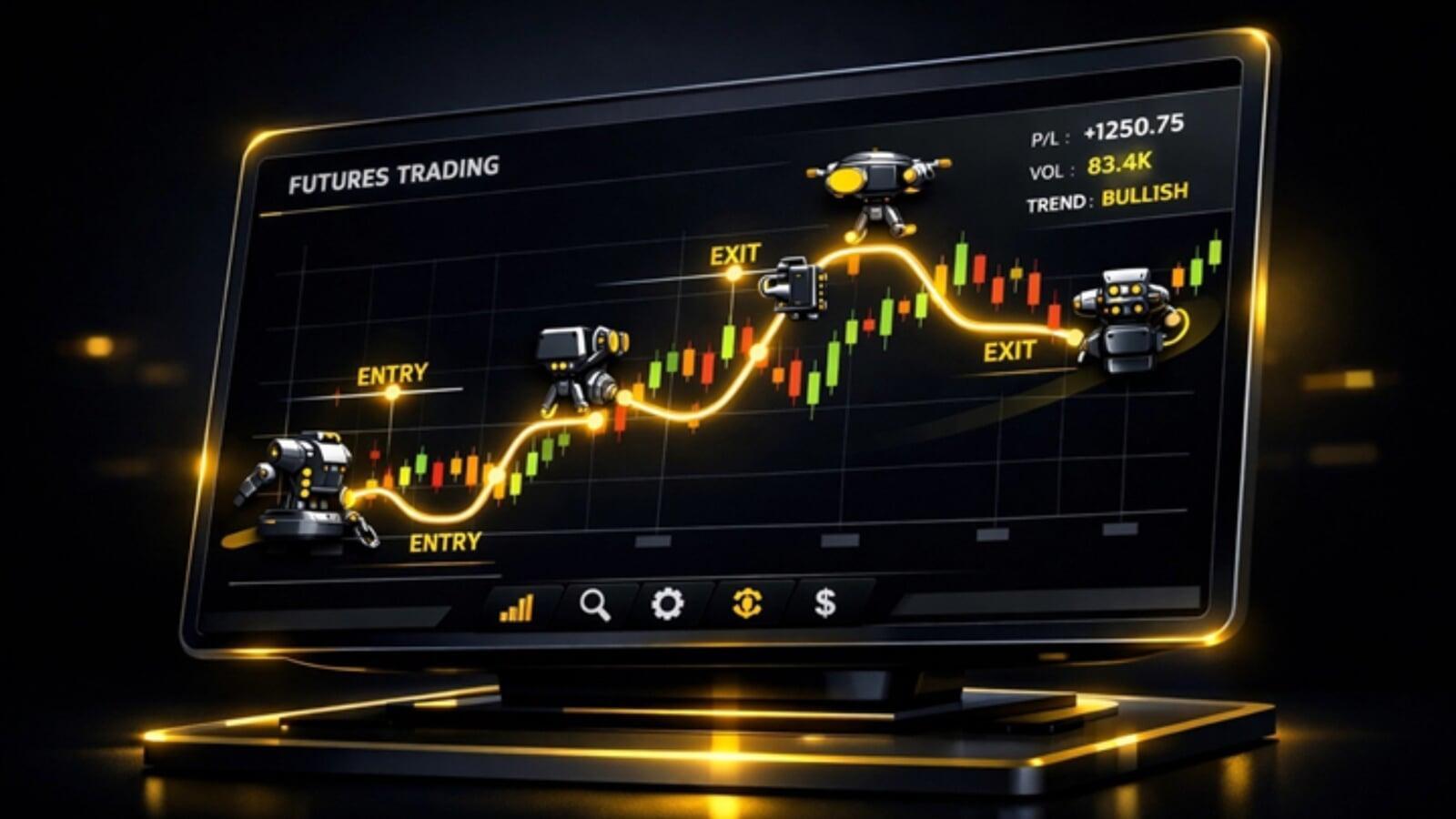
How automation fixes this: Automated systems execute every signal without subjective filtering. The software doesn't have opinions about which setups "look better": it simply executes the complete strategy as designed. This is crucial for realizing the expected performance of any futures trading signals system.
The Real Problem: Manual Execution Introduces Human Limitations
Every mistake we've covered stems from the same root cause: human beings aren't designed for the repetitive, emotionless, instant execution that profitable signal trading requires.
You bring emotions, biases, delays, fatigue, and subjective judgment to every trade. These human elements aren't weaknesses in your character: they're simply features of being human. But they're incompatible with optimal futures trading strategy execution.
Automated futures trading software like Sliver Bullet Pro isn't about replacing your intelligence or judgment. It's about executing the systematic parts of trading with machine precision while you focus on strategy selection, risk management, and continuous learning.
How Sliver Bullet Pro Transforms Signal-Based Trading
Sliver Bullet Pro addresses every execution error we've discussed:
You receive a futures trading signal at 9:32 AM. The alert says "Enter long ES at 5,245." But you pause. You want to check one more indicator. You refresh your chart. You scroll through Twitter to see if anyone else is talking about this setup.
By 9:38 AM, price has already moved to 5,252: seven points away from your intended entry. You either chase the trade and enter at a worse price, or you watch the entire move play out without you.
This hesitation happens because you're second-guessing the signal in real-time. Your brain introduces doubt at the exact moment when decisive action is required. Even a delay of 30 seconds can mean the difference between a winning trade and a losing one in fast-moving futures markets.
Mistake#2: Adjusting Your Position Size Based on Recent Results
Your last three trades were winners. You're feeling confident. The next signal comes through, and instead of your standard position size, you decide to increase to three contracts because you're "on a hot streak."
Or the opposite happens: you've had two consecutive losses, so when the next high-probability signal arrives, you reduce your position to just one contract instead of your planned two. You're trying to "protect" your account, but you're actually undermining your futures trading strategy.
Position sizing based on emotions rather than risk parameters destroys even the best signals. Your signal provider calculated their expected returns based on consistent position sizing: when you deviate, you're no longer following their methodology.
How automation fixes this: Automated futures trading software executes every trade with mathematically consistent position sizing based on your account size and predefined risk parameters. There's no psychological influence: just systematic execution
Mistake #3: Moving Your Stop Loss When Price Approaches It
This might be the most expensive mistake signal traders make. Your signal included a stop loss at 5,238. Price is currently at 5,240 and heading downward. You think, "If I just give it two more points of room, it might reverse."
You move your stop to 5,236. Then to 5,234. Before you know it, you've taken a loss three times larger than originally planned because you couldn't accept being wrong on this particular trade.
Stop losses exist for a reason: they're calculated exit points that protect your capital when the trade thesis is invalidated. Moving them defeats their entire purpose and exposes you to catastrophic risk.
How automation fixes this: Automated systems execute stop losses without question or modification. The moment price hits your predetermined exit, the position closes. There's no negotiating, no "just a little more room," no emotional attachment to being right.
Mistake #4: Exiting Winners Too Early (Then Watching Them Continue)
Your signal indicated a target of 5,260 with a stop at 5,238. You entered at 5,245. Price moves quickly to 5,253: you're up eight points and feeling good. Then price pulls back slightly to 5,251.
Panic sets in. What if this winner turns into a loser? You close the position at 5,251 with a six-point profit. Two hours later, price reaches 5,264: the signal would have been a complete winner if you'd simply let it run to target.
This mistake stems from fear of giving back profits. You're prioritizing the immediate emotional relief of booking a winner over following the complete futures trading strategy that generated the signal in the first place.
How automation fixes this: Automated execution maintains positions until predefined targets are reached. There's no early exit based on fear. The system follows the complete trade plan from entry through exit, capturing the full move the signal identified.
Mistake #5: Not Scaling In or Out According to the Signal's Instructions
Many sophisticated futures trading signals include scaling instructions: "Enter 50% position at 5,245, add remaining 50% if price reaches 5,242" or "Exit 50% at first target, let remainder run to final target."
These scaling techniques improve risk-reward ratios and position management. But executing them manually requires constant monitoring, precise timing, and unemotional discipline. Most traders struggle with at least one of these requirements.
You might nail the first entry but completely miss the second add-on because you stepped away from your screen. Or you forget to take partial profits at the first target, then watch the entire position reverse against you.
How automation fixes this: Sliver Bullet Pro handles complex scaling automatically. The software can execute multi-stage entries and exits with perfect precision, implementing sophisticated position management techniques that would be nearly impossible to execute manually with consistency.
Mistake #6: Ignoring Signals Because You're Emotionally Drained
You took three consecutive losses last week. Each trade followed the signal perfectly: you did nothing wrong: but the market simply didn't cooperate. Now it's Monday morning, fresh signals are coming through, but you can't bring yourself to take them.
You're protecting yourself from further emotional pain, but you're also guaranteeing that you'll miss the winning trades that follow losing streaks. Every successful futures trading strategy includes draw-down periods: the winning trades that follow are how you recover.
By allowing emotional exhaustion to override systematic execution, you're sabotaging the statistical edge your signals provide. You need to be present for every signal to capture the positive expectancy over time.
How automation fixes this: Automated futures trading software doesn't experience emotional fatigue. It executes every signal according to the programmed rules, whether it's following three winners or three losers. Consistency is the foundation of profitable futures trading signals: automation delivers consistency regardless of recent results.
Mistake #7: Taking Signals Selectively Based on "Feeling"
Your signal service sends out 15 trades per week. You don't take all of them: instead, you choose the ones that "feel right" based on your market view or recent price action. You're essentially trading your own discretion rather than following the signal provider's complete system.
This selective execution destroys the statistical integrity of the signal service. The provider's track record assumes you're taking every signal. When you cherry-pick, you're creating an entirely different strategy with unknown expectancy.
Often, the signals you skip end up being winners, while the ones that "felt right" become losses. Your subjective filter isn't improving results: it's adding randomness and emotion to a system designed to be systematic.
How automation fixes this: Automated systems execute every signal without subjective filtering. The software doesn't have opinions about which setups "look better": it simply executes the complete strategy as designed. This is crucial for realizing the expected performance of any futures trading signals system.
The Real Problem: Manual Execution Introduces Human Limitations
Every mistake we've covered stems from the same root cause: human beings aren't designed for the repetitive, emotionless, instant execution that profitable signal trading requires.
You bring emotions, biases, delays, fatigue, and subjective judgment to every trade. These human elements aren't weaknesses in your character: they're simply features of being human. But they're incompatible with optimal futures trading strategy execution.
Automated futures trading software like Sliver Bullet Pro isn't about replacing your intelligence or judgment. It's about executing the systematic parts of trading with machine precision while you focus on strategy selection, risk management, and continuous learning.
How Sliver Bullet Pro Transforms Signal-Based Trading
Sliver Bullet Pro addresses every execution error we've discussed:
• Instant execution eliminates hesitation and slippage
• Consistent position sizing removes emotional decision-making
• Automated stop losses protect capital without negotiation
• Target-based exits capture complete moves without early exit fear
• Complex scaling logic executes multi-stage entries and exits perfectly
• Tireless operation maintains discipline through winning and losing streaks
• Complete signal execution implements every trade in the system
The software integrates directly with futures trading signals services, automatically translating signals into executed positions without human intervention. You maintain complete oversight and control while eliminating the execution errors that destroy consistency. If you're serious about converting futures trading signals into reliable income, the question isn't whether automation helps: it's whether you can afford to keep trading manually. The performance gap between manual and automated execution grows with every hesitation, every moved stop loss, and every signal you skip because you're "not feeling it today."
How we Help?
Ready to eliminate execution errors from your futures trading strategy? Explore how Sliver Bullet Pro creates emotion-free, consistent execution of your favorite futures trading signals: or contact Sliver Tradez to discuss how automated futures trading software transforms signal-based strategies into systematic profitability.
The software integrates directly with futures trading signals services, automatically translating signals into executed positions without human intervention. You maintain complete oversight and control while eliminating the execution errors that destroy consistency. If you're serious about converting futures trading signals into reliable income, the question isn't whether automation helps: it's whether you can afford to keep trading manually. The performance gap between manual and automated execution grows with every hesitation, every moved stop loss, and every signal you skip because you're "not feeling it today."
How we Help?
Ready to eliminate execution errors from your futures trading strategy? Explore how Sliver Bullet Pro creates emotion-free, consistent execution of your favorite futures trading signals: or contact Sliver Tradez to discuss how automated futures trading software transforms signal-based strategies into systematic profitability.
Contact us -
Contact us -